Pando
Pando is a work in progress supported generously by the RedLine Insite Fund and the Andy Warhol Foundation for the Visual Arts. It is an interactive visual narrative that reflects on long term thinking through the 10,000-year story of Pando, an aspen colony and one of the oldest and largest living organisms on Earth.
This piece is designed for two participants. Each will sit in a modified rocking chair with motion sensors attached. As they rock, sonic elements begin and images emerge on a large screen in front of the chairs. Sound and visual cues teach participants what they can expect from synchronous or alternating movement of the chairs as well as how speed, pauses, and other gestures advance the narrative.
Images
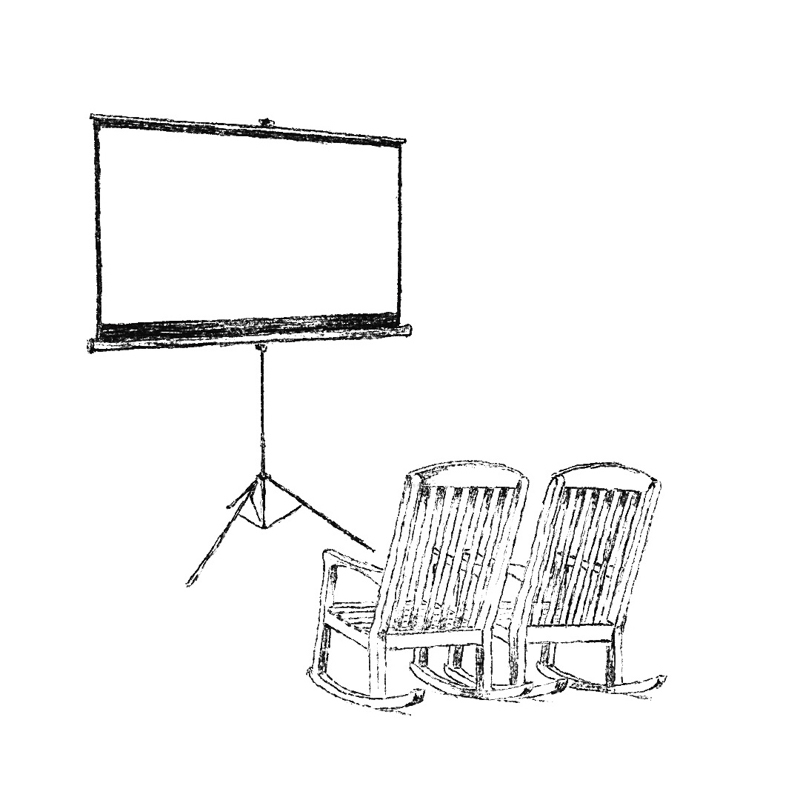
Installation sketch
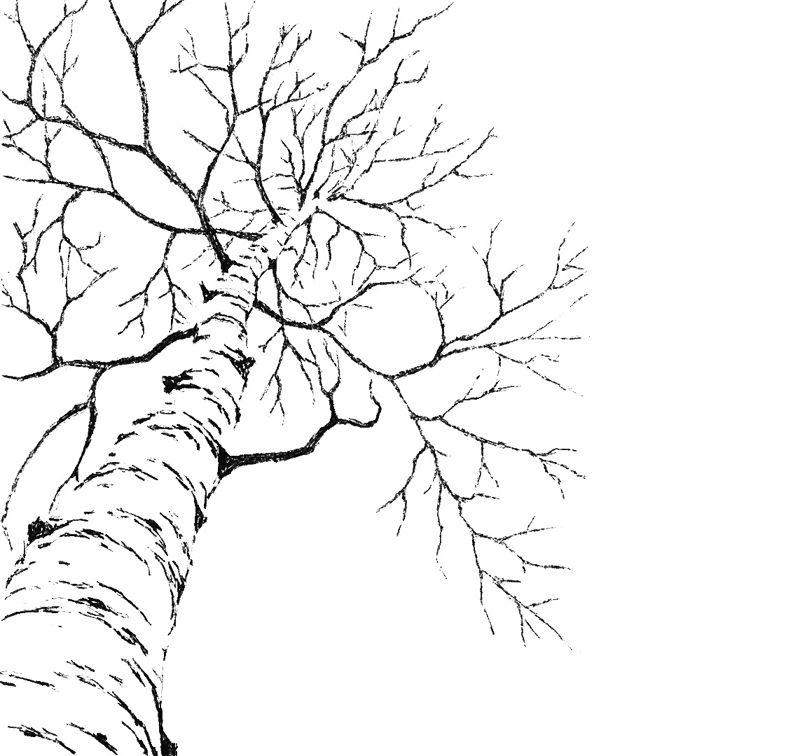
Process sketch
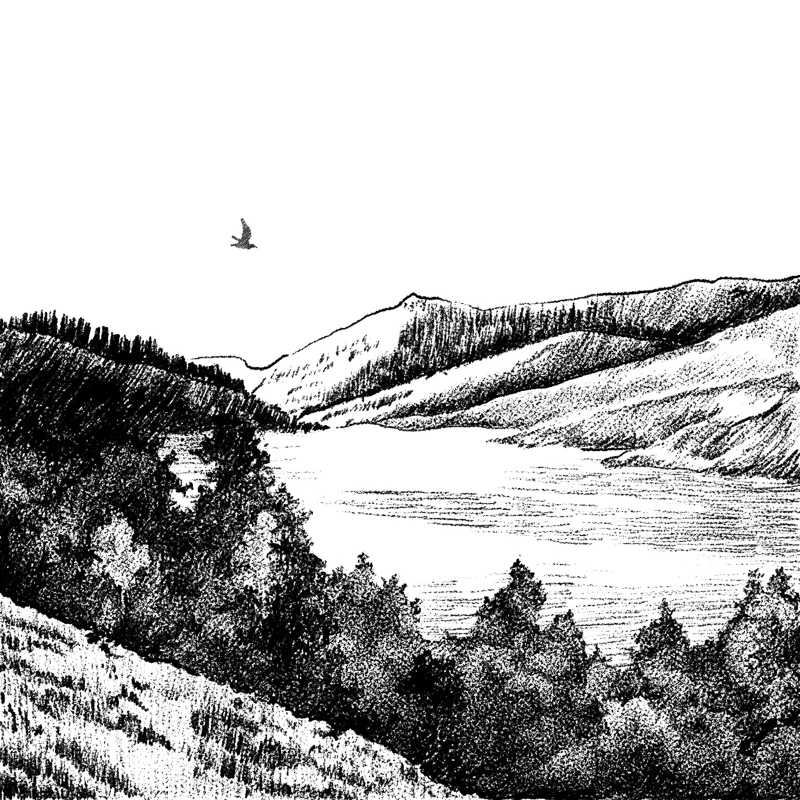
Process sketch, Fish Lake, UT
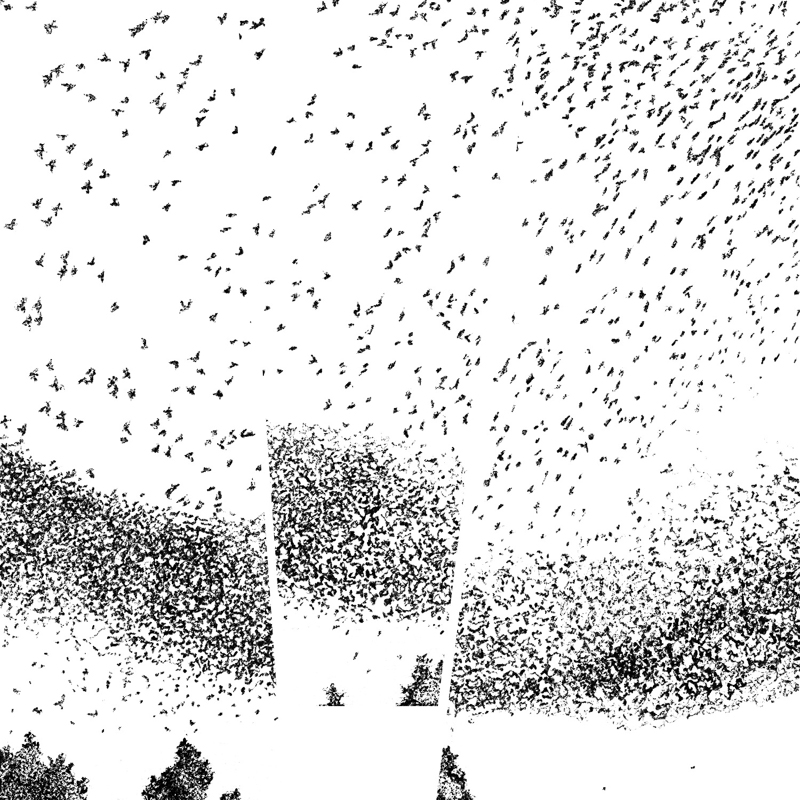
Puzzle sketch
Background:
At the present moment, the consequences of our actions last much longer than we do. Our bodies will die, but the impact of our choices endures. When the exhaust of our living exists in perpetuity, we need to learn to think beyond our physical and temporal limitations. This is no simple undertaking. Even our language fails when we try to envision much beyond the present day. Plenty of words exist to explain ancient history. We can speak in terms of millions of years ago (MYA) or time periods before the present day (BP), but we have no well-defined designations to consider the far future. This deficit in language gives us a clue about how to pursue long term thinking. We need to attend to the past in order to imagine how our present actions will influence the very distant future. Piecing together the forces that have shaped millennia is complicated. If only we could follow a single thread back in time.
Fortunately, we can. Less than a day’s drive from Denver, Colorado, is a thread that stretches deep into time and it is alive. The thread we are suggesting is called Pando. It is an aspen clone that is one of the largest and oldest living organisms on Earth. This ancient organism can show us both the past and the future. It has been alive for many thousands of years and hopefully, depending on our collective decisions, it will outlive any one of us. The exact age of an ancient living thing is difficult to pinpoint, but most experts agree that it has been growing since at least the last ice sheet receded from North America between 10,000-12,000 years ago. This is where our story begins.
The landscape would have been covered with melting ice and snow. Dark rivulets of meltwater appeared like streaks of ink across a blank page, their constant flow carved great crevasses and otherworldly shapes into the ice. Where bare soil became exposed, plants grew up and soon the landscape was transformed into a vast grassland that was home to mammoths and other megafauna. As Pando sprouted and grew over millennia, it would have stood witness to the passage of comets, volcanic eruptions, the extinction of large mammals, and the presence of humans. Humans would have been in the region from the beginning of this story. However, we did not significantly impact Pando until relatively recently. The construction of roads and buildings left our mark, and the removal of large predators from the ecosystem made the prospects for Pando’s survival incredibly bleak. Research and protective measures are ongoing and fortunately are showing some improved conditions. The relatively short lifespans of humans are presented adjacent to Pando's sustained narrative, alluding to the idea that we play an important part in a long and intertwined story.
Project goals:
- To provide a broad understanding of time. Our perception of time is tightly linked to the span of our lives. The piece provides participants with a meaningful invitation to reflect on time beyond our daily lives.
- To demonstrate interconnectedness through both content and form. We are not in this world alone. This piece explores the ways that every life on Earth, human or not, is deeply intertwined.
- To help viewers imagine the far future through connection with the distant past. Our legacies have a much longer tail than previously thought. We are joining a boundless and rich story, and we can decide how we want to shape it.
User experience:
This piece is designed for two participants. Each will sit in a modified rocking chair with motion sensors attached. As they rock, sonic elements begin and images emerge on a large screen in front of the chairs. Sound and visual cues teach participants what they can expect from synchronous or alternating movement of the chairs as well as how speed, pauses, and other gestures advance the narrative.
The physical design of this piece tells this story on three levels: within oneself (psychological), in connection with another person (social), and between people and non-people (environmental). Psychological: Participants may struggle with fractured attention or competing stimuli while transitioning from the pace of modern life to observing the passage of millennia. Social: The participants must work together to move through the piece. It is not possible to operate the piece alone. They are interconnected, just as the elements of Pando are. Environmental: Pando’s story highlights our duty to protect the vulnerable, particularly when our actions were the cause of that vulnerability. It affirms our humanity to express care and empathy to those around us.
Participants encounter puzzles that serve as gates, which must be opened before the narrative continues. The puzzles are designed to be enjoyable challenges for participants to solve. For example, the piece begins with each alternating rocks of the chairs laying down one line upon another. These lines form a cross-section of land which is then pulled apart with simultaneous rocking to reveal the topography where Pando grows. Other puzzles include connecting pieces of complex moving systems, such as flocks of birds or controlling weather systems as they pass over the landscape.
Team
- L Bethancourt - Story and Visual Design, Animation
- M Bethancourt - Programming and Game Design