Paper + Water
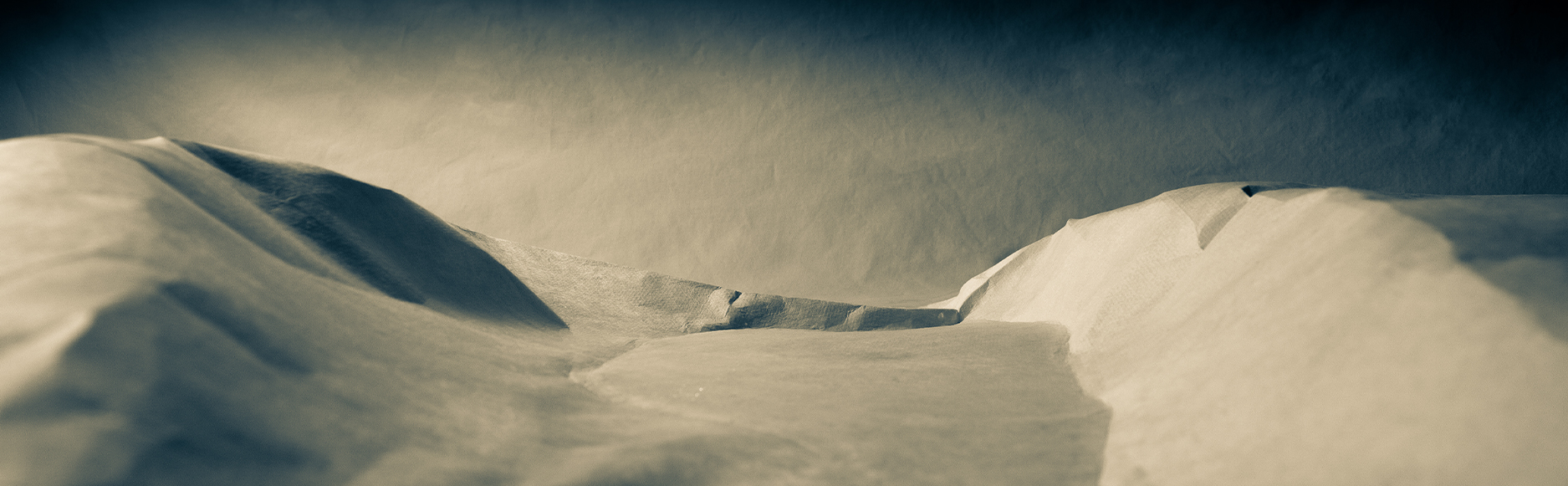
Experiments with bilayers and situated energy
When thinking about ways to get energy, large infrastructure likely comes to mind. Whether renewable or fossil fuel based, our power comes from massive production facilities. Wind turbines line mountain ridges, solar arrays shimmer in the desert, and oil refineries look like far off cities from the highway at night. Even more technology is required to provide convenient and constant access to this electricity. Switches, outlets, batteries, and gas pumps are our routine points of connection to the powered world. These are not the only ways to use energy though.
Energy is everywhere, we just forget about it because we have grown accustomed to electricity creating fast and big results. Ambient light, heat, and moisture are present in varying quantities in every environment. All of these elements have the capacity to store and release energy and they do so naturally as ambient conditions fluctuate. Using materials that are sensitive to these fluctuations makes it possible to capture and use this energy. The amount of ambient energy situated in any given environment is not enough to power any of our modern devices. However it is a valuable exercise to think about the ways we can adapt our materials and ourselves to the energy that is freely available to us.
Paper + Water is an ongoing series of small projects that explore ways ambient energy to actuate objects without the use of electricity. The method for doing this starts with a hydrophilic surface (cotton paper) which is treated on one side with hydrophobic materials (waxes) to create a bilayer. When the bilayer is exposed to moisture it physically transforms. The shape it takes depends on the grain of the paper and how it was folded. Transformations documented with time-lapse photography can be used as animated sequences in games or other interactive pieces.
Examples of paper actuated by water
Solar energy heated the copper plate. That energy was transferred to the water, which increased the relative humidity of the air and actuated the paper object. The object's movements are slower and smaller as the sun ligt moves away.
Materials: Parchment paper and Gamblin Cold Wax Medium
Documented with time-lapse photography. 24 fps over 18 minutes.
Materials: Legion Lenox 100 250 gsm paper and Gamblin Cold Wax Medium
Activated with water mist
Documented with time-lapse photography
Materials: Southworth 25% Cotton Business Paper and Gamblin Cold Wax Medium
Activated with standing water and mist
Documented with reverse time-lapse photography
Simplest form of a bilayer reacting to water
Lenox Legion 100 and Gamblin Cold Wax Medium activated with water
Documented with time-lapse photography
Materials
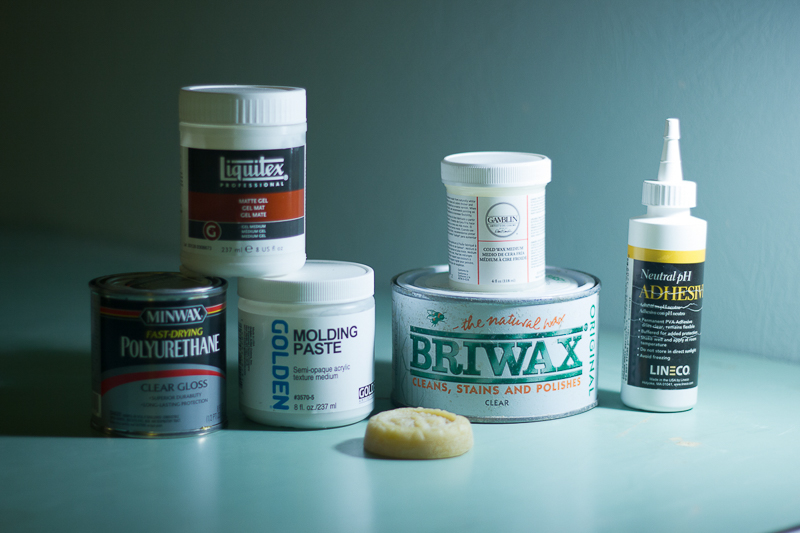
I tested a variety of hydrophobic materials, and got the best results with Gamblin Cold Wax Medium and Briwax Original Clear.
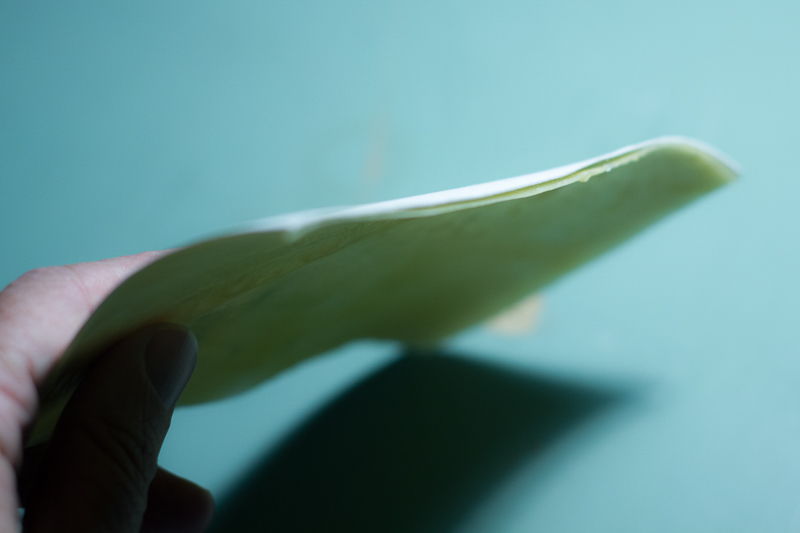
Thicker waxes (beeswax) delaminated from the hydrophilic substrate easily, and the acrylic polymers got tacky when exposed to water.
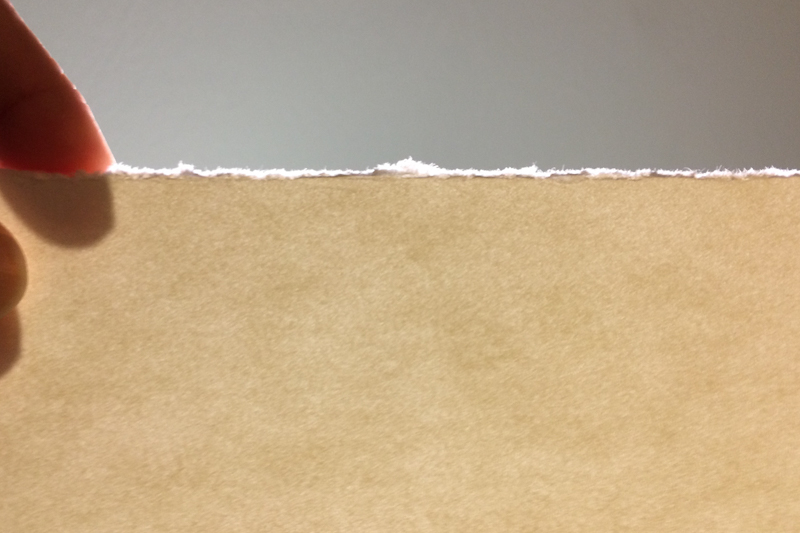
Papers with a high cotton content and directional grain work consistently well. Lennox Legion 100 is shown here.
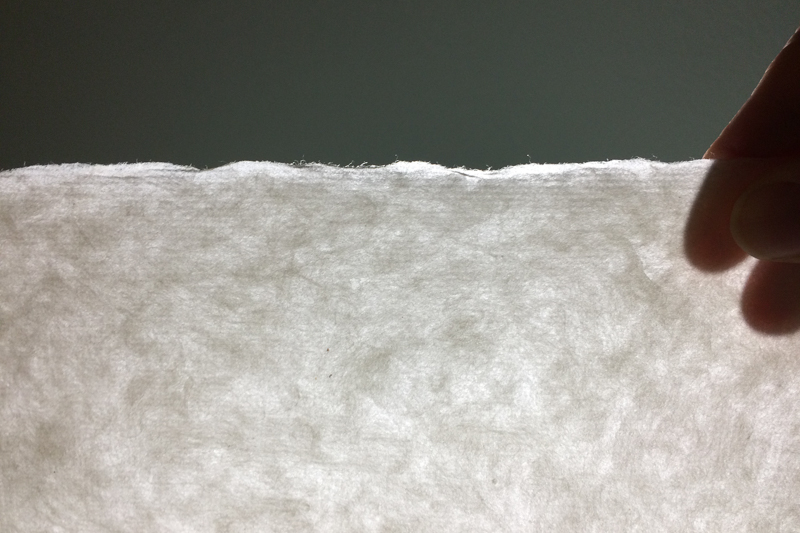
For structures with components that need to remain stable, papers made of mulberry bark work well. Without a directional grain, Mulberry Garden paper, shown here, does not warp easily on any axis.
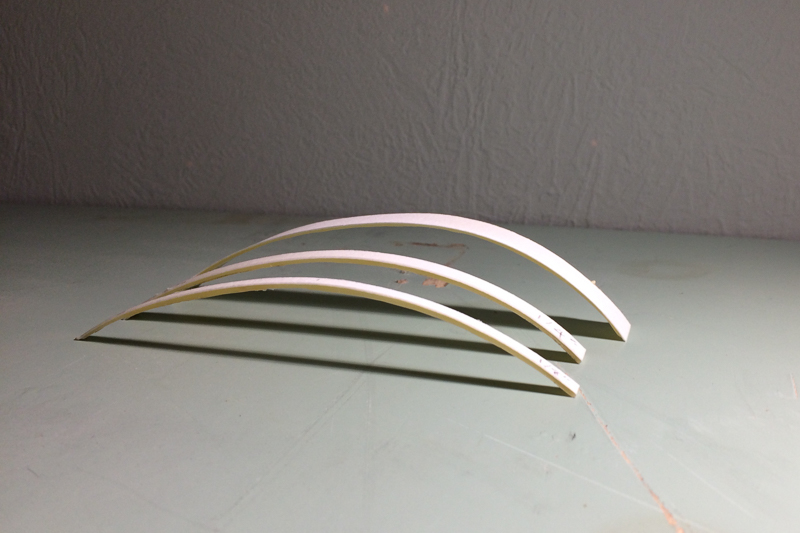
I addition to grain direction, width affects how paper will actuate. From front to back, these strips of Legion Lenox 100 paper are 1/8, 1/4 and 1/2 inches wide.
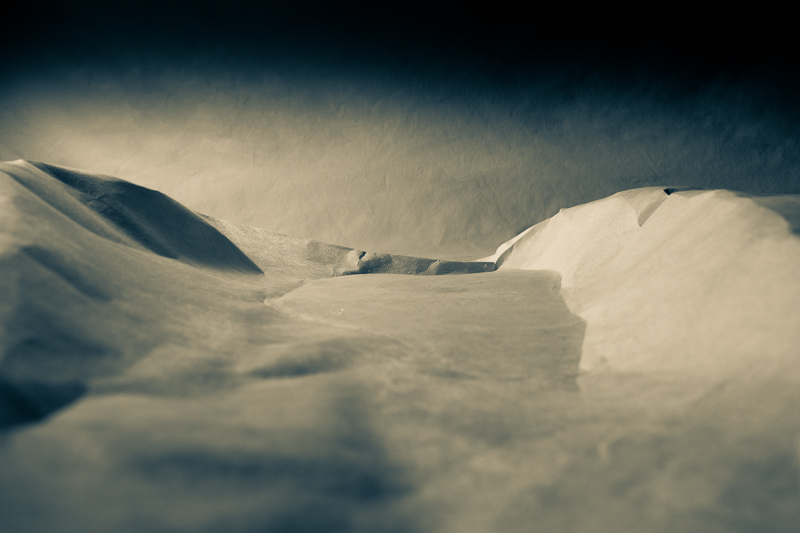
Model of Fish Lake in Utah constructed of a single sheet of mulberry paper. Since Mulberry paper does not react dramatically to moisture. This model can act as a stable base for other bilayer components that will actuate when exposed to moisture.
Moisture applied to paper structure with snow on Vimeo.
An interesting potential way to apply moisture to a paper structure is with snow. The paper landscape shown above was documented with time-lapse photography during snowfall for 5 hours.